Grief is a subject that I have wanted to write about for a long time, not only because it is a universal experience but it is an envitiable part of any psychotherapy process. In my experience, grieiving is how move through our present day suffering and continue our growth. Therfore, our grief should be met with deep reverence.
The American Psychological Association defines grief as “the anguish experienced after a significant loss”, and while this definition is all encompassing and relatable, there are certain aspects of grief that can be challenging to process. Grief is an inevitable part of life, given our time on this earth finite. As we get older time goes by quicker; I remember as a child that summer seemed to stretch on an on, and as I age summer has become brief and fleeting. Even as we enjoy our most precious moments we all know that they will eventually change. In addition, the longer we are on earth, the more losses we accrue, which can lead to feeling weighed down and sense of defeat.

In our lifetime we may experience various types of grief including the loss of loved ones, the death of a cherished pet, the loss of a home, changes in culture and systems we think are immuatable, or the loss of jobs (including retirement). Beyond these more concrete losses there are ambigous losses, where there is no definitive end, such as losing someone to an addiciton or mental illness or incarceration. Ambigious grief is much more challenging to process where you begin the greiving process while the person you knew is still alive. Anyone reading this may be able to recount the various types of losses and changes they have endured throughout their lifetime (and there may be many).
Most people are aware of the stages of grief , which is a helpful framework to organize the process we encounter while navigating a loss. One aspect I wish was more emphasized is that most greiving is not linear, we do not move through the stages of grief as they are laid out. We can cycle though these stages, moving forward and then back, in a maddening circle. One circumstance I often see in my therapy practice is clients cognitively understand the impact a loss has had on their life, but through the therapy process they can access feelings connected to these losses. It is only then that one may go between different stages of grief and later find meaning to their particular suffering. My aim as a therapist is to engender a sense of patience to this process, allowing it to unfold and to respect the ebb and flow of our emotions.
When I reflect on losses in my own life I am filled with a wave of nostalgia for lost time but also a yearning to fully experience all the world has to offer. Yet, even when we actively choose something that is right for us, it is often paired with the loss of another path…so even in the best of circumstances, we are met with the bittersweet reality that endings and loss to make way for a new frontier, a new choice. The Buddhist teaching on impermanence views “the cup is already broken”. This sentiment offers the concept that if we can see that all things in the world will break down or lose their form, we can appreciate them in the present moment. This is a beautiful sentiment, but sometimes sitting with this reality makes my heart feel like it will burst.
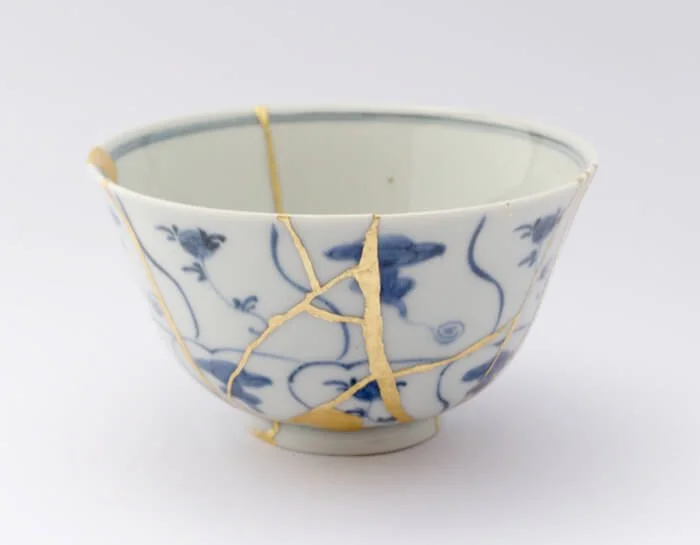
Maybe if we are able to be with our feelings and build tolerance and acceptace of these emotions and sensations, we may become just like the japanese art of Kintsugi (seen above), where we are beautiful because of the scars of loss. I wish that this could help us all be kinder and softer with one another, knowing we all only have so much time together, and everyone is navigating some loss or suffering at every moment. Maybe we can tell those we love that we love them, whenever it comes to mind.
Sending anyone reading this lots of love and patience as they navigate their own grief and suffering.
